
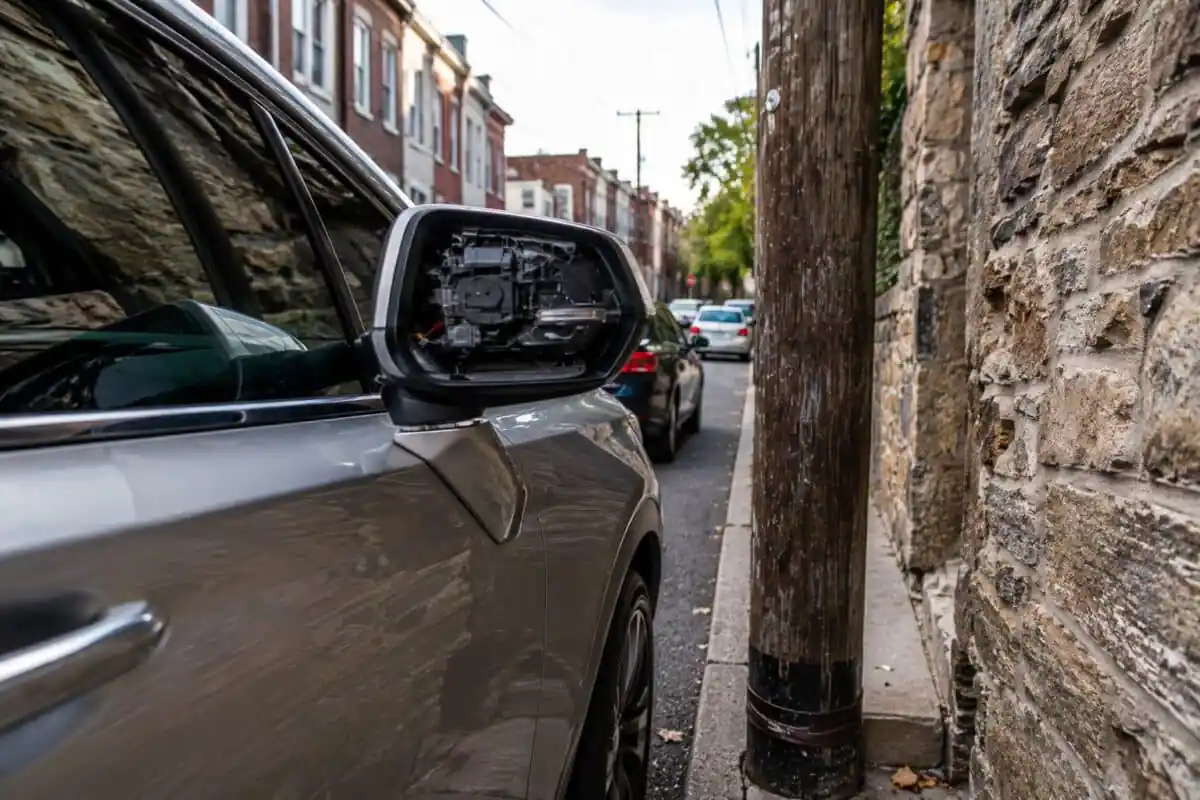
Anyone who drives regularly in Roxborough knows the feeling. You navigate Ridge Avenue confidently enough, then turn onto one of the narrow side streets branching off it.
Suddenly, the road shrinks, parked cars crowd both sides, and you’re threading a gap that barely accommodates your vehicle. Sometimes you make it through clean. Sometimes you don’t.
Side mirror strikes and sensor damage rank among the most common auto body issues that Roxborough drivers deal with. It’s not because they’re careless drivers, but because the streets genuinely don’t forgive mistakes.
The neighborhood’s tight grid, its mix of narrow rowhouse blocks, and the constant pressure of street parking on both sides create conditions that punish even experienced drivers occasionally.
Understanding what actually happens to your vehicle when those strikes occur. Also, what proper repair looks like saves you from both safety risks and expensive surprises down the road.
Why Roxborough Streets Are Uniquely Punishing on Vehicles
Roxborough didn’t develop with modern vehicle dimensions in mind. The neighborhood’s street grid predates SUVs, crossovers, and the general trend toward wider vehicles that has defined the American auto market for the past two decades.
Streets that accommodated traffic comfortably in 1960 feel genuinely tight in 2024 when both sides carry parked cars, and a full-size pickup needs to pass through.
Ridge Avenue itself moves traffic reasonably well. The side streets tell a different story. Most blocks and the residential grid regularly present drivers with gaps that demand precise steering and confident spatial awareness.
Now, add a delivery truck parked halfway onto the sidewalk, a trash collection day with bins extending into the lane. The expected oncoming traffic on a block with no room to spare, and the margin for error disappears entirely.
This combination of narrow streets, dense parking, challenging topography, and modern vehicle widths explains why side mirror repair in Roxborough stays consistently busy at local shops. It’s not a fluke. It’s geography.
What a Mirror Strike Actually Does to Your Vehicle
Most drivers assume a clipped mirror is a cosmetic problem. Replace the glass, maybe snap the housing back into position, and move on. That assumption costs people money and creates real safety risks.
Modern side mirrors are sophisticated assemblies. Beyond the glass itself, they house heating elements, turn signal indicators, blind spot monitoring sensors, cameras that feed into parking assist and lane departure systems, and motorized adjustment mechanisms.
A strike hard enough to fold the mirror, or worse, snap it partially off the housing, can damage any combination of these components without leaving obvious external evidence.
The sensor array inside the housing sustains impact damage that doesn’t announce itself until you notice your blind spot sensors monitoring system throwing warning lights.
The vehicle looks fixed. The safety systems don’t function correctly. And the driver operates with a false sense of restored capability.
Car Sensor Calibration in Philly: Why It Matters More Than Most Shops Admit
This is where the repair conversation gets more technical and where the difference between a thorough shop and a shortcut shop becomes very clear.
Modern vehicle safety systems don’t just need working hardware. They need calibrated hardware. Blind spot monitoring sensors, forward collision warning systems, lane keeping assist, and adaptive cruise control all operate based on precise calibration parameters.
This hardware tells the system exactly where to look, what distances to measure, and how to interpret the data it receives.
When a side impact damages a sensor, even subtly, the physical position of that sensor may shift slightly within its housing.
The sensor itself may still power on and appear functional during a basic diagnostic scan. However, its field of view has changed. The distances it measures have shifted. The system continues operating on pre-damage calibration parameters that no longer match the sensor’s actual position and orientation.
The result is a safety system that appears to work but delivers inaccurate information. A blind spot monitor that triggers late. A lane departure warning that misses genuine drift. A parking sensor that underestimates distances to obstacles.
Car sensor calibration in Philly requires specialized equipment. Ideally, it requires ADAS calibration targets, manufacturer-specific software, and a controlled environment where the calibration process can run without interference.
Dr. Ralph’s: Roxborough’s Auto Body Expert for 19128
Dr. Ralph’s serves the Roxborough community with the kind of local knowledge that out-of-neighborhood shops simply don’t carry.
The team understands the specific damage patterns that Roxborough streets produce because they see those patterns consistently. It is a routine to fix mirror strikes from tight side-street passes, sensor damage from parking lot scrapes, and the full range of cosmetic and functional damage that urban Philadelphia driving generates.
The shop combines traditional auto body expertise with modern diagnostic and calibration capability. That combination matters specifically for the mirror and sensor repairs that Roxborough drivers need most.
Dr. Ralph’s doesn’t treat sensor damage as someone else’s problem or send customers elsewhere for calibration work. The full repair happens under one roof, with one team accountable for the complete outcome.
Visit drralphs.com to schedule your inspection and get a clear assessment of what your vehicle actually needs.
Frequently Asked Questions
How do I know if my side mirror strike damaged the sensors inside the housing?
Warning lights on your dashboard, particularly blind spot sensors monitoring, lane departure, or parking assist indicators, can signal sensor damage after a strike. However, some sensor damage doesn’t trigger immediate warnings.
Can I drive with a damaged side mirror in Pennsylvania?
Pennsylvania law requires functional mirrors that provide adequate rearward visibility. A damaged or missing driver-side mirror creates both a legal issue and a genuine safety risk.
Does insurance cover side mirror repair and sensor calibration?
In most cases, yes, provided the damage resulted from a collision event covered under your policy. Comprehensive and collision coverage both apply, depending on how the damage occurred. Dr. Ralph’s Automotives works directly with insurance carriers and handles the claims process on your behalf.
What makes Dr. Ralph’s the right choice for Roxborough drivers specifically?
Local knowledge, complete repair capability, and consistent accountability. Dr. Ralph’s understands the damage patterns Roxborough streets produce, handles both the body repair and the sensor calibration in-house, and works with insurance carriers to simplify the process for drivers.
Parting Thoughts
Roxborough’s streets aren’t getting wider. The vehicles navigating them aren’t getting narrower.
That combination means side mirror strikes and sensor damage will continue happening to careful, experienced drivers, not because they drive badly, but because the environment demands perfection, the street layout doesn’t always allow.
When the inevitable happens, the repair deserves the same seriousness as the safety systems it affects.
Dr. Ralph’s handles that complete repair for Roxborough drivers every day. Visit drralphs.com and schedule your assessment with the auto body shop in 19128 that knows from the inside out.