
If you have ever been in a car accident, you know the feeling. Right after the accident, your mind is on everyone in the car and making sure everyone is okay. Once that settles, one question comes to mind: what do you do with the car now?
Before any repair work starts, your vehicle needs to go through a proper inspection, and honestly, this step matters more than most people realize. A good collision inspection Philadelphia drivers trust can mean the difference between a car that just looks fixed and one that is actually safe again.
Starting With a Visual Inspection
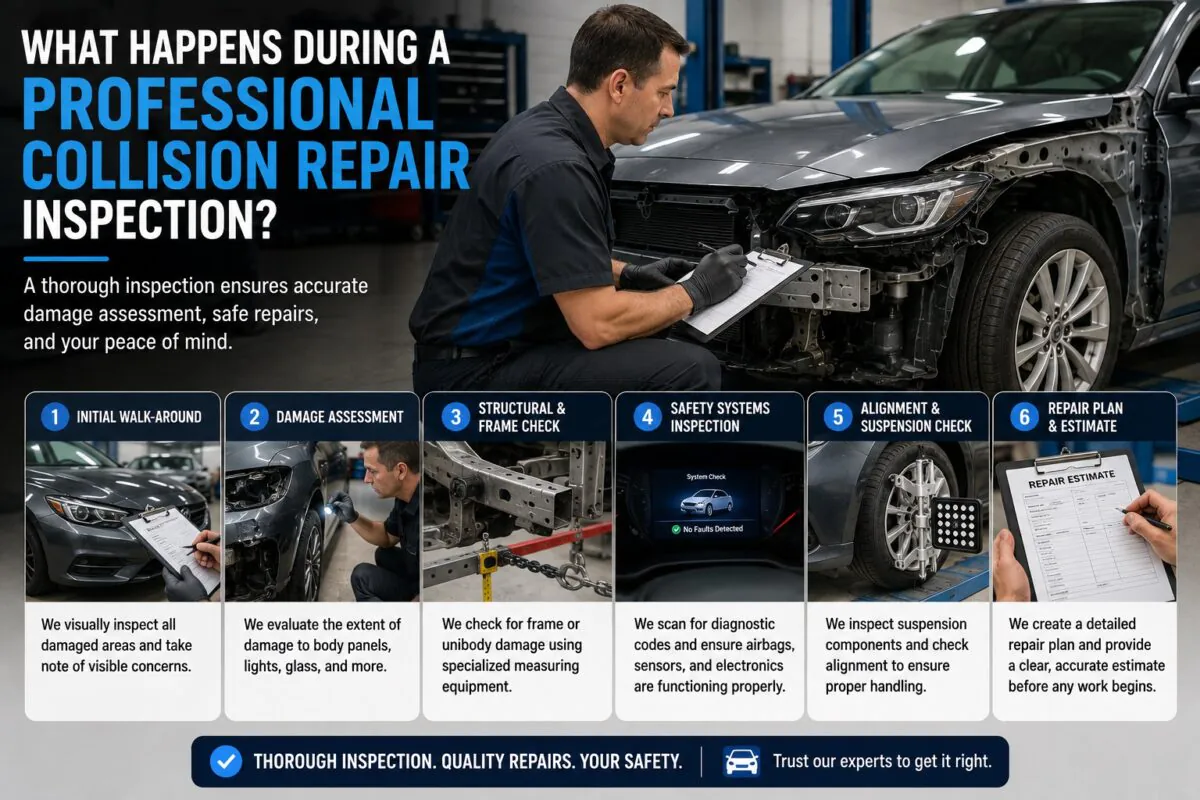
The first thing that happens when your car reaches an auto body shop Philadelphia locals recommend is pretty simple. Someone walks around your car and looks at it. Dents, scratches, cracked lights, a bumper hanging on for dear life- all o f it gets noted down. It sounds basic, and in a way it is, but an experienced technician catches things most of us would walk right past. A panel that does not line up quite right. Paint that looks a shade off. These little details tell them where to look next.
Checking the Frame and Mechanical Parts
This is where things get interesting. After the walk around, technicians pull out equipment that measures your car’s frame against the exact specs it left the factory with. Even a small shift here, something you would never notice just by looking, can throw off how your car handles or how well it protects you if something happens again. This part of the accident damage assessment PA shops perform is one of the most important parts of the entire repair process.
They also check your suspension, your alignment, and the steering. These parts take a beating in a crash, sometimes even in accidents that seemed minor at the time. They will also pop the hood to check the wiring, sensors, and cooling system. Today’s cars are basically computers on wheels, so even a relatively minor impact can knock something loose without leaving a visible mark.
The Damage You Cannot See Is the One That Worries Us
Here is something that surprises a lot of people. What you see after an accident is usually just the tip of it. Bumpers and hoods are actually built to resist on purpose, soaking up impact so it does not reach you. But that also means the real damage often hides where your eyes cannot reach. That is the whole point of a real vehicle inspection Philadelphia shops perform properly. Frame rails, damage zones, airbags, even the underside of your car- all of it gets checked.
Skip this step, and you could end up driving a car that looks perfectly fine but isn’t structurally as safe as it should be. It simply isn’t worth the risk, especially when your safety and your family’s safety are on the line.
Getting It All on Record
Once everything has been checked, the shop documents it. Photos, notes, measurements, all of it gets recorded before a single tool touches your car. This is not just busywork either. It matters a lot when you are dealing with your insurance company. Clear documentation makes the claims process go smoother and cuts down on arguments over what actually needs fixing.
So if you are typing collision repair near me into your phone right after an accident, pay attention to whether the shop takes this part seriously. A shop that documents everything carefully is usually a shop that cares about doing right by you, not just moving cars in and out.
What Happens After the Inspection
Once the inspection wraps up, the shop puts together an actual plan. What needs replacing, what can be repaired, roughly how long it will take. A shop worth your time will sit down and explain this to you in plain words, not throw a confusing invoice at you and hope you do not ask questions.
FAQs
What does a collision repair inspection include?
It covers the outside damage you can see, plus a much deeper look at the frame, the mechanical parts, and the electrical systems. The whole point is catching everything, not just what is obvious.
Can a collision inspection detect hidden damage?
Yes, and honestly, this is the main reason these inspections exist in the first place. Technicians use tools that measure the frame precisely and check parts you would never spot on your own, so nothing slips through unnoticed.
Why is a collision repair inspection important before repairs begin?
Because without it, a shop might only patch up what is visible and miss what is underneath. That can turn into bigger safety problems and bigger bills later, which nobody wants.
How long does a professional collision inspection usually take?
It really depends on the accident. A small fender bender might only need an hour or so. Something more serious could take a few hours since there is simply more to check.
Final Thoughts
A collision inspection is not just paperwork or a box to check. It is what actually tells you whether your car is safe to drive again, not just repaired on the surface. Taking a little extra time to pick a shop that inspects thoroughly can spare you money, stress, and real safety risks down the road. If you’ve been in an accident and aren’t sure what comes next, the team at Dr. Ralph is here to answer your questions, inspect your vehicle thoroughly, and help you get back on the road safely.