
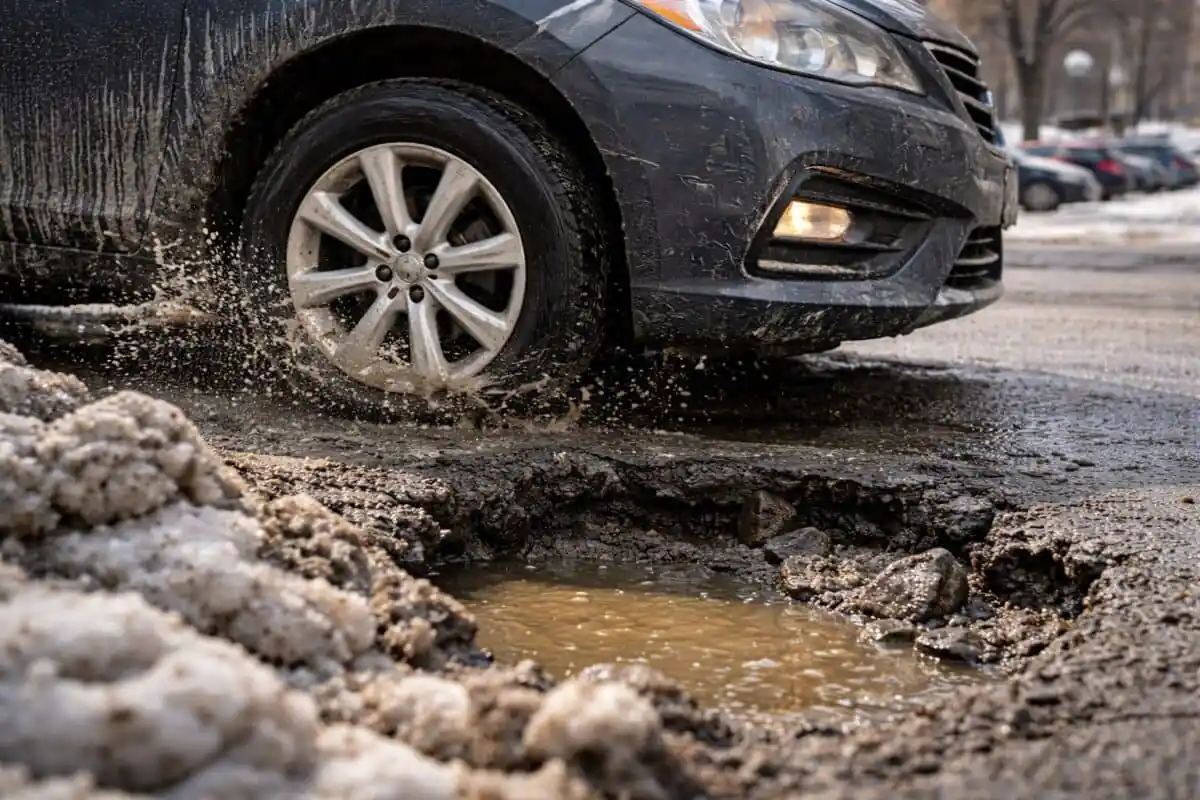
Have you ever hit one of those “Philadelphia craters” so hard you actually checked your rearview mirror to see if your bumper was still attached?
For every city driver, hitting a pothole is a rite of passage. But that bone-jarring thud isn’t just a scare; it impacts your vehicle’s structural integrity.
Winter in the Delaware Valley is a season of two halves: the visible chaos of snow and the invisible destruction of what follows. When the city freezes and thaws, our roads transform into a minefield of deep chasms and corrosive slush.
While most drivers worry about sliding on ice, the long-term financial risk comes from damage beneath the floorboards.
At Dr. Ralph’s, we see the aftermath every day. Whether it is a bent rim or a compromised frame, the need for professional pothole damage repair in Philadelphia that drivers face is at an all-time high during these colder months.
Potholes Are More Than Just a Bump
Potholes aren’t just annoying; they apply thousands of pounds of force to your tires and suspension.
In Philadelphia, the freeze-thaw cycle is particularly aggressive. Water seeps into asphalt cracks, freezes and expands, then melts, leaving a hollow cavity. This cavity collapses under the weight of traffic.
When your tire drops into one of these pits, several things happen simultaneously:
The impact can knock your steering components out of their precise factory settings. If your steering wheel is suddenly off-center or the car pulls to one side, your alignment is compromised.
Beyond the risk of a flat tire, the rim itself can bend or crack. Even a tiny hairline fracture in a wheel can lead to a slow leak or a dangerous blowout on the highway.
If you’ve recently had a “close encounter” with a deep hole on Kelly Drive or the Expressway, seeking pothole damage repair in Philadelphia is essential. Ignoring a slight vibration now can lead to uneven tire wear that ruins a $200 tire in a matter of weeks.
Road Salt and Corrosion and Why It’s Bad
While pothole damage is the “loud” hazard, road salt is the silent one. To keep our streets passable, the city uses thousands of tons of rock salt and brine.
These chemicals work by lowering the freezing point of water, but they are also highly reactive.
The underbody of your car is the most vulnerable area because it is rarely washed and is composed of hundreds of metal joints, lines, and fasteners.
Salt acts as an electrolyte, accelerating the chemical reaction that creates rust. This is why car rust prevention is not just about keeping your car looking pretty; it is about keeping it safe.
Salt specifically targets steel brake lines that can corrode until they develop pinhole leaks, leading to a loss of stopping power.
The heat from the exhaust accelerates the formation of holes in your muffler or catalytic converter. Rust can weaken the “skeleton” of your car, which is a major safety concern in the event of a collision.
The “Synergy of Destruction”
The most dangerous thing about Philly winters is how potholes and salt work together. Imagine you hit a deep pothole. The impact might scrape the protective coating off a suspension arm or create a tiny crack in the paint of your wheel well.
Now, the “raw” metal is exposed. As you drive through salty slush, that chemical mixture gets deep into the fresh scratch. Without the protective barrier, rust begins to form instantly. This is why a simple impact can lead to a systemic failure.
Effective car rust prevention involves more than just a car wash; it involves inspecting the underbody for these small “entry points” where corrosion can take root.
Signs Your Underbody or Alignment Is Compromised
You don’t always need a mechanic to tell you something is wrong; your car will usually tell you first. Keep an eye out for these red flags:
If you are driving straight but your steering wheel is tilted to the left or right, your alignment is gone.
Feeling a rhythmic shaking in the steering wheel or the seat? You might have a bent rim or a shifted tire belt.
Clunking or popping sounds when turning or going over bumps are signs that a suspension component was damaged during a pothole hit.
If you notice orange, flaky residue on your exhaust or suspension components, prevention is no longer enough; you’re dealing with active corrosion.
When these symptoms appear, searching for pothole damage repair Philadelphia experts should be your top priority.
At Dr. Ralph’s, we use precision measuring equipment to determine how far your wheels have shifted. We also inspect the chassis for hidden stress fractures.
How Dr. Ralph’s Protects Your Investment
We believe that a proactive defense is the best way to save money. Our winter inspections aim to catch small issues before they turn into major, tow-truck problems.
Our approach to car rust prevention involves thorough cleaning and the application of protective barriers to vulnerable areas.
We also specialize in structural integrity. As a full-service collision and repair shop, we don’t just fix the tire. We inspect the control arms, tie rods, and frame to ensure the entire system is safe and properly aligned.
Don’t Let Winter Win
Philadelphia’s roads are famous for their character, but that character shouldn’t cost you your car.
Regular alignment and underbody checks protect from corrosive salt and can extend your vehicle’s life by several years. Remember, the salt you drive through today is eating your car tonight.
Investing in car rust prevention and timely repairs is the only way to ensure your vehicle remains safe and valuable. Don’t wait for a breakdown or a failed inspection to take action.
Get in touch with the experts at Dr. Ralph’s today!