
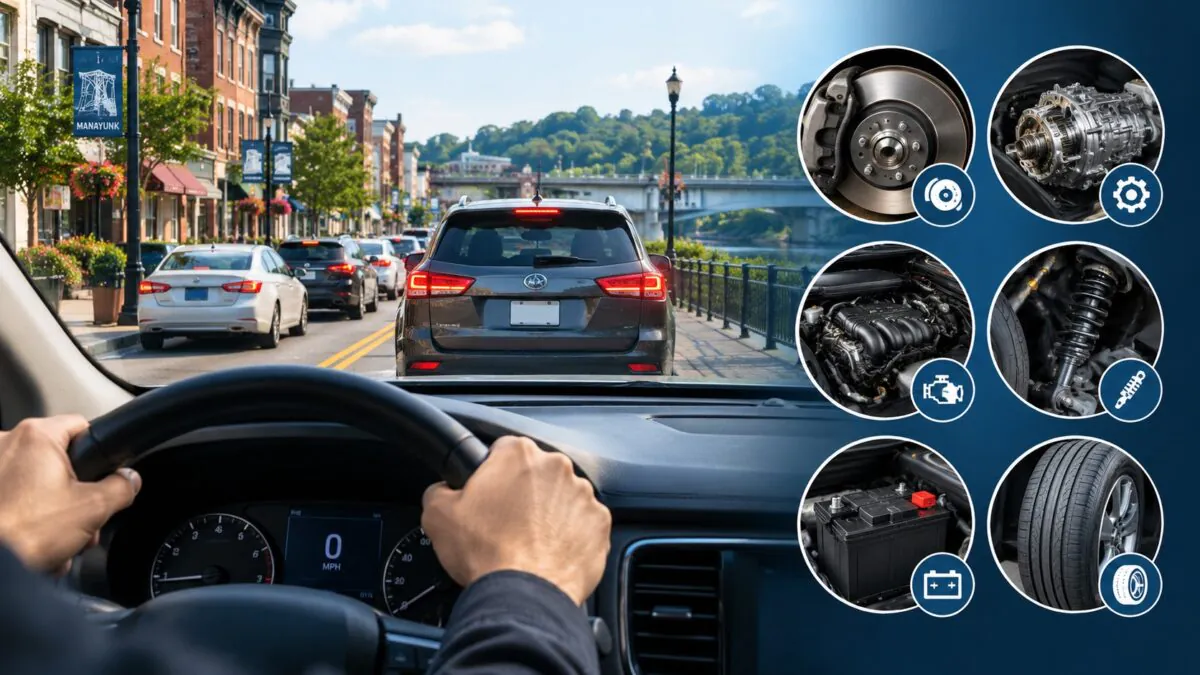
Driving around Manayunk comes with its share of frustrations. You might crawl up Levering Street on a hot afternoon. You might sit through three light cycles on Main Street. Or you might idle through construction delays along Ridge Avenue.
While you rattle around in stop-and-go traffic, your vehicle is really taking a beating. That never-ending process of starting, stopping, and creeping along places much strain on your car. If you have steep hills, then the impact on your vehicle is even worse.
As time passes, those little, abrupt journeys gradually exhaust your brake pads, heat your transmission fluid, and stress your battery.
You should learn what city driving does to your car so that you know what repairs you will possibly need soon. Generally, some sounds or sensations may indicate that something is wrong with your automobile.
When that happens, turn to reliable mechanical repair Manayunk drivers depend on. It keeps your car running smoothly through every local commute.
The Physical Toll of Traffic on Mechanical Components
Modern cars are built tough, but heavy city driving is surprisingly harsh on internal parts. Vehicle manufacturers have a name for tough driving conditions. They classify frequent short trips as severe operating conditions. The same goes for bumper-to-bumper traffic and heavy idling.
You’re cruising on an open highway. Air flows freely through your grille to cool the radiator. Your transmission sits comfortably in top gear. Your brakes also get a long break. City driving flips that balance upside down.
Now picture city traffic. Your engine runs continuously with very little airflow. Your transmission shifts back and forth constantly between low gears. Your foot also stays glued to the brake pedal.
Staying proactive with mechanical repair Philadelphia mechanics recommend, pays off. It prevents small urban wear and tear from turning into a sudden breakdown. That could otherwise happen on your way to work.
Every time you accelerate from a complete standstill on a steep hill, your engine has to work hard to move thousands of pounds of metal. Doing that repeatedly between Ridge Avenue and Green Lane builds up intense heat and friction.
The absence of highway wind blowing across the radiator causes the cooling fans and water pumps of your vehicle to work with increased intensity. Automatic transmissions produce heat quickly while switching between first, second, and third gears due to traffic congestion.
Long hours of idling can cause wear on your battery. The A/C, lights, and wipers consume battery power faster than the alternator can recharge.
Suspension components ensure that potholes and cobblestones are dealt with efficiently, while shocks, struts, and alignment continue to exert pressure.
Booking routine auto repair Manayunk shops is a smart habit. It ensures these hardworking parts get checked. That way, a minor issue won’t turn into a major repair bill.
Key Signs Your Vehicle Needs Attention
The usual functioning of a car gives many indications of components that might be failing. Being aware of how a car behaves while driving is important to understand if there are any issues.
A noise made during braking, like screeching or grinding, could mean that brake pads are worn out. It is also possible that brake rotors are damaged.
If the motor of a car is shaking or hesitating at a red traffic light, this could indicate a failure due to carbon deposits or dirty spark plugs caused by short drives. In case of transmission jerking and hesitation, this is usually caused by overheating transmission fluid.
If your brake pedal starts feeling soft or spongy when you press it, trapped air or moisture has likely entered the lines from extreme heat buildup.
Setting aside time for preventative car maintenance Manayunk technicians suggest, is worthwhile. It helps catch these subtle warning signs early. That way, you can drive with confidence.
Frequently Asked Questions
How does stop-and-go traffic affect a car’s mechanical components?
Stop-and-go traffic causes your vehicle to operate with constant stress. A vehicle accelerates from a complete stop, with its engine having to work at maximum power and torque, which results in a large amount of heat produced in the engine and transmission.
Since the vehicle is moving slowly or remains stationary, not much air can flow through the radiator, and this causes the fans to operate non-stop.
With time, this additional heat causes the oil to become old and damage transmission fluid much faster than high-speed driving.
Does stop-and-go driving cause brakes to wear out faster?
Stop-and-go driving leads to increased wear and tear on brake systems compared to long-term highway driving. The moment you engage the brake pedal, the hydraulic pressure forces the brake pads to squeeze onto the metal rotors using friction to bring the car to a halt.
With all of that friction comes increased heat. In the midst of heavy traffic, there is hardly enough time for your brakes to cool down between stops, resulting in pad glazing, rotor warping, and accelerated brake fluid deterioration.
Can frequent short trips affect engine health?
Taking too many short trips below five miles inhibits your engine from reaching its proper operating temperature. A cold engine tends to result in incomplete combustion of fuel, resulting in the presence of unburnt gasoline and water vapor inside the engine.
In a longer drive, the moisture will evaporate; instead, during a short trip, the water and gas mix immediately into the motor oil, forming a thick sludge that blocks narrow oil channels and causes premature wear of the bearings and valves.
What maintenance should drivers consider if they frequently drive in traffic?
Individuals who drive frequently in heavy city traffic or on short trips must follow the severe duty maintenance schedule for their vehicle. This means changing the oil and filter on a more frequent basis, either after driving a total of 3,000 to 5,000 miles instead of the regular interval of 7,500 miles.
In addition, brake pads and rotors should be checked more regularly, transmission fluid changed according to the schedule, batteries tested once a year, and filters replaced often enough to keep them clean from dirt and garbage.
Trust Your Vehicle to Dr. Ralph’s
Local traffic can be intimidating without the added worry of potential car complications. A dependable automobile means working with a car repair provider that is knowledgeable about local traffic patterns and how they impact the functioning of your vehicle.
At Dr. Ralph’s, we take pride in providing honest, high-quality automotive care to keep our neighbors safe on the road.
All types of car services, including basic oil changes and checking of brakes to complicated diagnosis of engine and transmission services are all taken care of by our skilled technicians.
We explain the requirements of your car in detail to you without a hint of pressure tactics or hidden charges.