
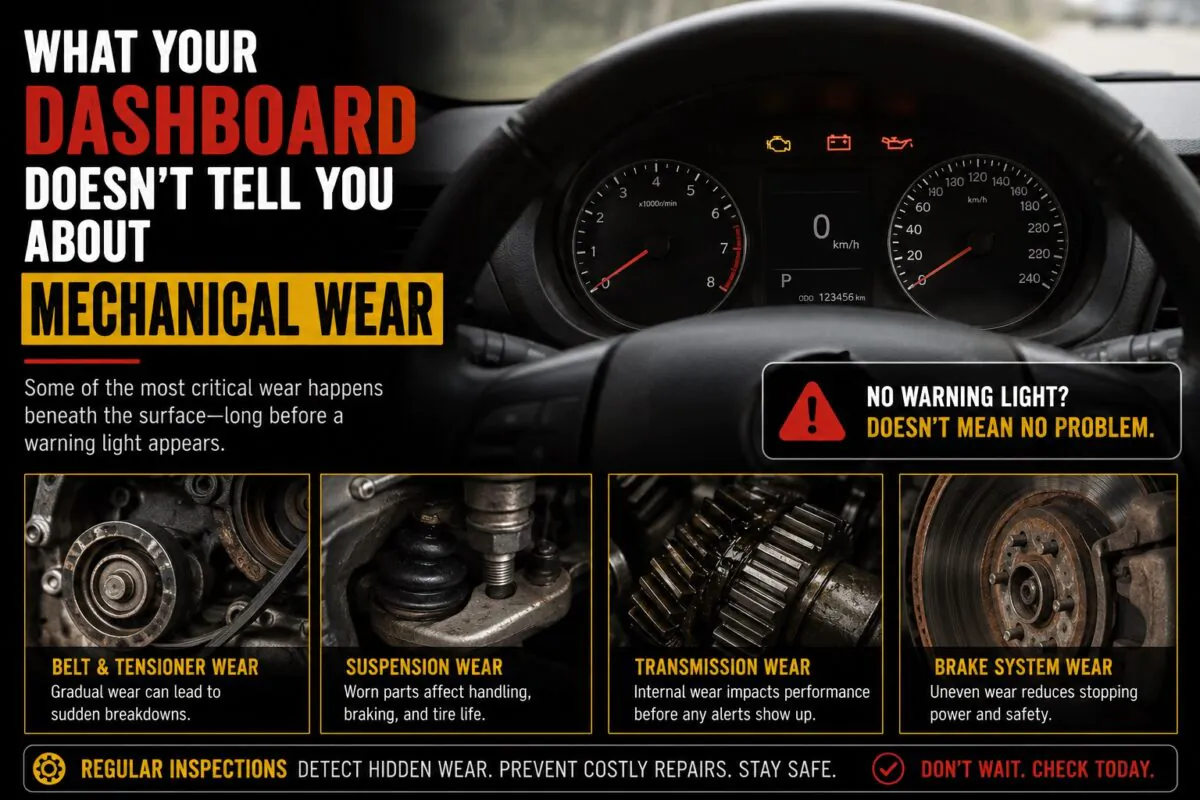
The dashboards of contemporary vehicles have proven quite useful in alerting drivers to mechanical issues before they become serious. Their immediate signals have led to timely inspections and, ultimately, help drivers avoid costly automotive repairs near me.
However, it is important to understand that the dashboard warning system falls short in a few ways. It cannot monitor the condition of every mechanical part, and some components are not equipped with the sensors that perform vehicle diagnostics Philadelphia.
Hence, the driver is left in the delusion that the vehicle is in top-notch condition, but in reality, the parts are gradually deteriorating beneath the surface.
Therefore, it is important to understand the blind spots of the on-board monitoring mechanism. This kind of knowledge can save you from spending extra on the mechanic shop Roxborough and reduce the risk of accidents.
What Is the Dashboard Warning System?
The dashboard warning system is a built-in electronic safety feature that is linked to several sensors, which in turn are connected to an onboard computer. This entire network works in harmony to detect certain types of issues.
The mechanical problem is communicated through illuminated signals, messages, or sounds. These signals provide an opportunity for the driver to schedule car maintenance Philadelphia, before mechanical wear turns into a bigger and costlier headache.
However, not every component is connected to a sensor. Hence, the dashboard warning system is unable to detect their performance and condition.
What to Keep in Mind While Depending on the Dashboard?
Dashboards Monitor Issues: They Are Designed to Detect
The only weakness of the dashboard warning network is that it solely monitors the components associated with sensors.
The conditions of the parts present under the hood or beneath the vehicle cannot be physically felt. Hence, the only option left is to conduct a mechanical inspection in Philadelphia manually.
Mechanical Wear Develops Long Before Detection
Moreover, it is not necessary that the vehicle diagnostics Philadelphia mechanism will notify drivers ahead of the problem.
In reality, the signals illuminate on the dashboard well after the damage has already reached a certain point. This is because the network measures the operation electronically.
Warning Lights Cannot Measure Physical Damage
Every day, driving stresses out the mechanical assemblies. However careful the driver may be, when metal surfaces move against each other, there is bound to be tiny cracks, corrosion, or fluid leaks.
These changes are only discovered upon manual inspection; the warning signals are of no use in such circumstances.
Dashboard Cannot Assess Intermittent Problems
Some drivers may wrongly identify an intermittent problem as mechanical wear. External factors, such as cold weather, heavy acceleration, wet roads, or long drives, can cause symptoms that resemble automotive breakdowns. At times, the issue disappears without the intervention of a mechanic shop in Roxborough.
How to Detect Mechanical Wear Early?
So, the real question is, since the dashboard warning system fails to identify certain issues, how should drivers detect mechanical wear? The answer to this is that they should immediately seek automotive repairs near me if the following are felt:
- Excessive bouncing
- Unusual noises
- Delayed acceleration
- Loose steering
- Burning odors
What Does the Dashboard Fail to Reveal?
Thinning of Brake Pads
It is a misconception among drivers that the alert network will send a signal immediately when the brake pads start to wear out. In reality, the signal comes after the fluid level or color has already changed. Delayed brake response and vibrations are common indicators of a worn-out pad.
Aging Suspension
The stress from driving over potholes, speed bumps, and rough roads reduces the life of the suspension system and its parts. The injuries require the trained eyes of a technician; otherwise, they will progress into a dangerous condition.
Deterioration of Wheel Bearings
Wheel bearings support the entire weight of the vehicle while allowing the wheels to rotate smoothly. They must remain in excellent condition to ensure safe driving. Their lifespan can be shortened by exposure to water, road salt, contamination, or inadequate lubrication. In many vehicles, the warning system does not detect a problem until the damage begins to affect the anti-lock braking system (ABS).
Deterioration of Battery Health
Another shortcoming of the warning network is that it identifies charging problems and not the batteries’ declining capacity. The battery may have enough voltage within itself to avoid triggering the symbol. However, dimmed headlights, a slow engine, and electrical glitches should be enough for the driver to understand there is a problem.
Frequently Asked Questions
Can a vehicle have mechanical problems even if no warning lights are on?
Yes, at times, drivers cannot rely solely on the warning lights, as they either issue an alert too late or do nothing.
What types of mechanical wear are not detected by dashboard warning lights?
Some issues include worn-out brake pads, suspension failures, and an aging battery.
How can drivers identify hidden mechanical wear?
Drivers have to be sharp and mindful of any unusual 🡪 noises, vibrations, leaks, or strange odors.
Why are routine mechanical inspections important?
Routine mechanical inspection in Philadelphia helps identify problems that the warning signals cannot pick up.
A Reputable Garage for Automotive Repairs Near Me
Dr. Ralph’s Automotive Services has been in the car maintenance Philadelphia industry for almost a decade. Our team is determined to give you our best diagnostic services and get you back on the road as soon as possible. Explore all our maintenance offerings by visiting our website, drralphs.com.